

Lent 2026
This year, Lent begins on Wednesday, February 18th, 2026, and runs through Good Friday, April 2nd, 2026. Lent is a 40-day period of fasting, prayer, and worship in preparation for the celebration of Easter.
2026 Lenten Community at Legacy
This Lent, we’re focusing on what it means to abide in Christ—not just personally, but together. Each year at Legacy, we form a Lenten Community committed to prayer and fasting as we seek the presence of Jesus.
Join the community below to receive guidance on fasting, encouragement along the way, and daily devotional emails to help you engage with Jesus throughout Lent.
What is Lent?
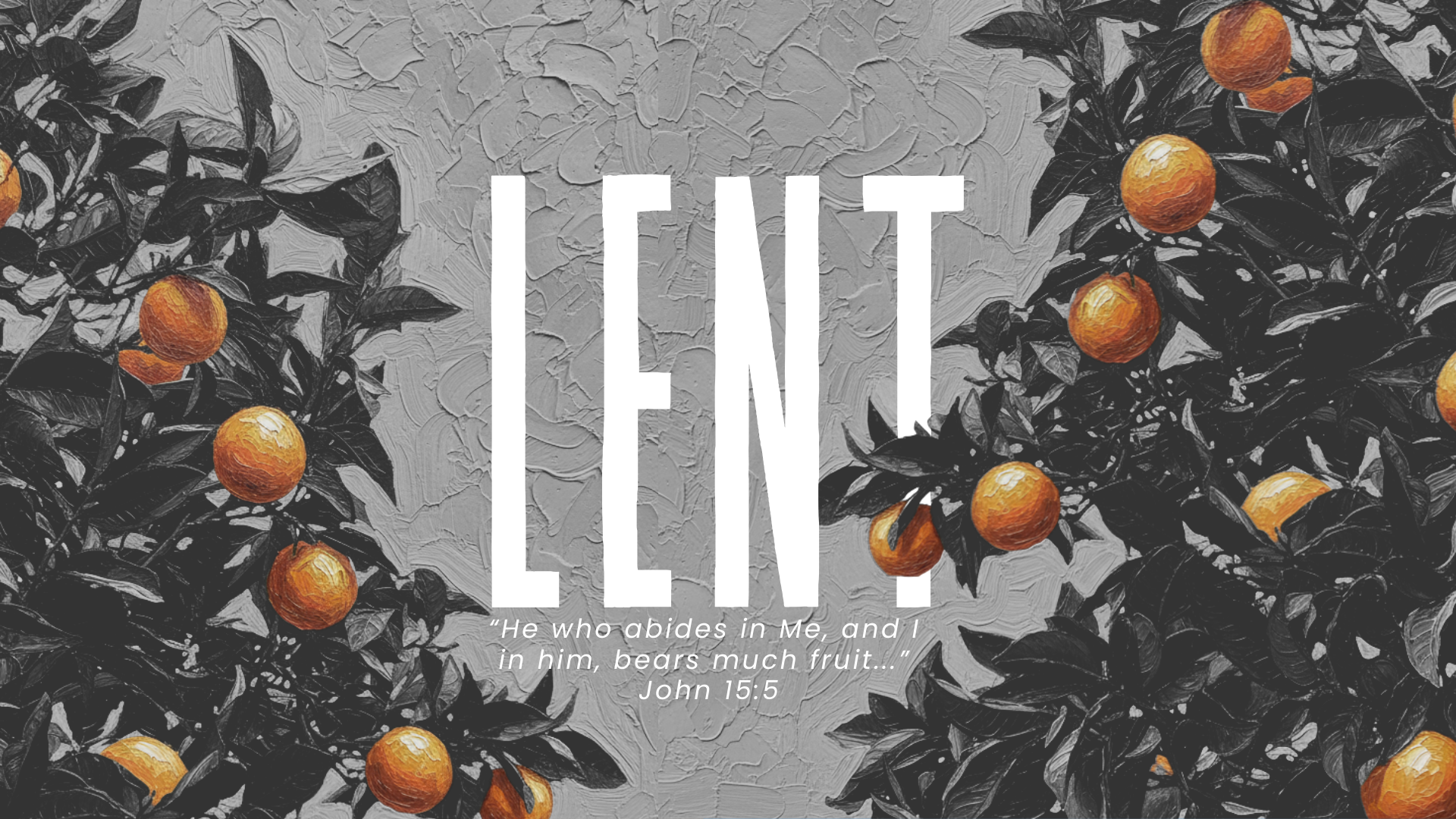
Lent is the 40 days (not counting Sundays) leading up to the celebration of Jesus rising from the dead on Easter Sunday. The word “Lent” comes from an Anglo-Saxon word meaning “Spring” and the lengthening of days that happens with the changing seasons. The time of year when hours of darkness decrease and the hours of light increase.
Lent was a time when people in the early church would prepare themselves to identify with Christ through baptism and for those who have been baptized to connect or reconnect with Jesus more deeply.
At Legacy, we take this time to prepare our hearts to enter into the celebration of Jesus conquering sin and death. We do this by identifying with the suffering of Jesus through the spiritual discipline of Fasting.
What is fasting?
You are probably familiar with the word “Fasting” as a time when you do not eat. This is usually in preparation for something to come, like a medical procedure, or as a part of a health routine. When we fast for spiritual reasons we are also preparing for something to come and as a part of a spiritual health routine. Fasting for spiritual health and preparation is more than just “not eating”.
Two principles need to be present for fasting to be the most effective. Abstinence and Engagement.
Abstinence, simply put, is when you stop doing something.
Engagement, in contrast, is when you start doing something.
To enter into a fast you need to do both. The purpose of stopping certain behaviors or activities for a time is to break your dependence on them and to free up time and attention for something else. If you decide to fast from your mid-day meal and choose to work through that time instead you may experience some benefit from saying “no” to your body's desire for food but it’s more likely that you’ll just be hangry. Hunger or desire is more than a necessary element of fasting it's the goal. But not in the way you might think. The goal is to be hungry for something different, something better. Fasting is meant to shift your appetites away from being met apart from God to being met in Him and through Him.
Draw near to God and He will draw near to you. Cleanse your hands, you sinners; and purify your hearts, you double-minded. - James 4:8
…let us draw near to God with a sincere heart and with the full assurance that faith brings, having our hearts sprinkled to cleanse us from a guilty conscience and having our bodies washed with pure water. -Hebrews 10:22
How to Fast?
Let's start with some questions to help you figure out what kind of fast would be good for you.
What area of your life needs to be transformed by Jesus?
Where are you struggling? What needs to change?
How can you make Jesus the King of those places?
Being King means His will and desires rule over your own.
How can you fast in that area of your life?
How can you abstain from (or stop) doing what you desire to engage (or start) doing what He desires instead?
What do you feed yourself with?
How do you satisfy or comfort yourself when you are hurting, lonely, bored, horny, depressed, insecure, tired, anxious, sad, or afraid? You should consider fasting from whatever that is.
What does Jesus want to feed you with instead?
It is not enough to just stop doing things that are sinful or not good for us. Transformation happens when we allow those places to be filled with things from God instead.
Answering those questions honestly involves another spiritual discipline, confession. We have to admit there are things that we run to that are not Jesus when Jesus is who we need. Confessing what those things are and admitting to ourselves (and probably a trusted Christian friend) that they are not what Jesus wants for us is the first step in breaking our hunger and desire for them.
Telling a Christian friend what you feel like you need to fast from and why is another spiritual discipline we practice during Lent, humility. As difficult as it can be to involve someone else in your fasting if you are the only one who knows the commitment you are making you are more likely to not see it through long enough to reap the benefit.
Praying and asking the Lord to show you what He would like you to fast from, turning away from those things (repentance), and asking yourself hard questions (self-examination) about why you do what you do are all spiritual disciplines that are good for us to practice during the Lenten season and open us up to a deeper and more intimate relationship with Jesus.
Example Fast
This is where you need to exercise caution and wisdom. The following are examples. They are meant to be descriptive, not prescriptive. You need to fast from the things that YOU feel are obstacles in YOUR relationship with Jesus. Doing a fast that someone else is doing because that is what God asked them to do may be of no real benefit to you if that is not what God is asking you to do. It’s easy to fast from things that you don’t struggle with. Remember fasting is not the point. A closer and more intimate relationship with Jesus is the point. Resist the temptation to take the path that allows you to say you are fasting while not actually experiencing anything that would transform you to be more like Jesus. Here are some examples to help you understand what we are talking about.
Food Fasts
If what you want when you are stressed or struggling is to comfort or reward yourself with things you can eat consider these types of Fasts
- Fast a meal every day of Lent (Fast during breakfast, lunch, or dinner)
- Fast several meals per day during Lent (Fast Breakfast and Dinner or Lunch and Dinner)
- Fast from any food before a certain time of day during Lent (No food until _____ and then a normal size healthy meal)
- Fast from any food every day during Lent - water only (can be extreme. Consult your doctor before attempting)
- Fast from specific foods, types of foods, or food groups (Meat, Dairy, Sweets, Processed foods, Desserts, Breads, Starches, Fast Food, Snack Foods, Coffee, Soda)
- Fast from solid foods during Lent (Drink water, juice, and broth. Also consult your doctor)
- A Daniel Fast ( eat a vegetarian or vegan diet)
- A Warrior Fast (no breakfast, no lunch, no snacking, and eat a healthy meal for dinner)
Remember that the time you would have spent planning, preparing, consuming, and cleaning up can now be spent doing something that fosters your relationship with Jesus.
- Prayer
- Reading Scripture
- SHAPE Journaling
- Journaling
- Devotions
- Time with other believers
- Christian Books or Audiobooks
- Christian Music
- Worship
- Volunteering or Serving others
Media Fasts
How much time do you spend scrolling, on screens, or consuming media? Do you use streaming services and apps to “check out” when you are tired, board, depressed, or overwhelmed? Do you run to entertainment to distract yourself from hurtful or uncomfortable situations or feelings? Consider these types of media fasts
- Social Media Fast (log out and temporarily delete or password-protect all social media apps on your phone during Lent)
- App Fast (Lock yourself out of all unnecessary apps and turn off all unnecessary notifications)
- Streaming Fast (Log out of all your streaming services)
- Media Black Out (No secular media during Lent)
- Video Game Fast (turn off the gaming systems during Lent)
- Secular Music Fast (Turn off the radio in the car. Hide or label secular playlists)
- Screen Fast (Nothing on screens except what is necessary for work or school)
- Don’t take your phone to bed with you.
Engage differently during these times. Do things like…
- Be still. Be silent. (Maybe you can’t hear God because your life is too loud. Your mind to busy)
- Pray (Talk to God about whatever you would post on social media)
- Call people and talk with them. Encourage and pray for them
- Listen to or play Worship Music
- Read your bible
- SHAPE Journal
- Journal
- Read a Christian Book
- Play a game with your family or friends
- Watch a Christian movie (some of them are actually pretty good)
- Take a walk by yourself to be alone with God
- Spend time with other people who love Jesus
Social Fasts
Do you run to certain people, groups, or relationships before you run to Jesus? You don’t have to be a jerk about it but it is ok to limit, have boundaries, or even eliminate certain relationships (especially if they are toxic or abusive) during Lent.
- Friend Fast (Don’t cut people out of your life completely but if you’re filling your life with friends at the exclusion of Jesus maybe put some limits on it)
- Texting Fast (If you talked to Jesus as much as you texted you and Jesus how would that change your relationship with Him?)
- Romantic Fast (could your romantic interests survive a cutback of time during Lent so you both can focus more on Jesus? If not, what does that say about the relationship?)
- Sexual Fast (If your spouse is on board take a break from sex. If you don’t have a spouse you should definitely fast from sex until you do)
If you choose to engage in this kind of fast it’s a good idea to let people know what you are doing and why. Let them know when and how you are available so they don’t feel cut out of your life for 40 days (unless that is what you feel like God is asking you to do then maybe get some Godly counsel). Be forewarned, some people may not like it!
Instead, consider these types of things
- Spend time with a Christian Mentor
- Take someone the Lord is asking you to befriend to lunch or coffee
- Pray for and about your relationships and write down what you heard God say.
- Write letters to people you love telling them how you feel about them, why they are a blessing to you, and why you thank God for them.
Creative Crosspolination
Pray, listen to the Lord, and be creative! There are all kinds of ways to mix your abstinence (stop doing) and engagement (start doing).
Fast from Starbucks or Dutch Bros (abstinence). Set that money aside to do something for someone else (engagement). Maybe bless someone by inviting them to lunch after church (We don’t fast on Sundays. Sundays are feast days).
Other Creative Fasts
- Snooze Fast (fast from the snooze button that takes time away from God in the morning)
- Spending Fast (don’t buy anything unnecessary during Lent)
- Shopping Fast (Don’t look at things online or in the store that you want but don’t need)
- Procrastination Fast (Stop putting off until tomorrow what God is asking you to do today)
- Fantasy / Daydream Fast (Stop indulging your mind's wandering thoughts. Take your thoughts captive and make them obey Jesus)
- Profanity Fast (Why do you cuss? What is it that it does for you that you should be looking to Jesus for? Why do you fill your mouth and other people's ears with words of cursing instead of words of blessing? Pray about it.)
Notes on Fasting
- All “fasts” assume non-essential activities or behaviors. Jobs or roles that require or depend on any of the above are obviously not a good idea.
- If you anticipate any fasting having a significant impact on your physical or mental health you should consult your doctor.
- You also should not subject others to your fasting against their will. Example: You should still provide meals for your children even if you are fasting from food.

Copyright 2026 The Legacy Christian Church
All Rights Reserved.